

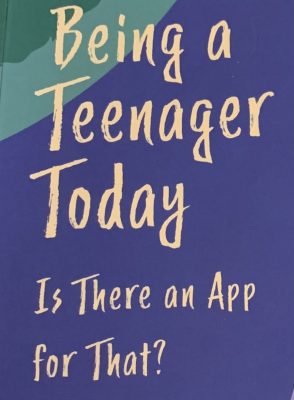
I have already spread over two texts the consequences that suicidees will suffer, but thanks to the publication of a small book dedicated to parents and teen-agers by Rhada Soami Satsang Beas, I can now help to understand and especially how to get hold of this scourge which seems to become a sad reality in our customs.
It’s so common that one tends to get used to it.
Can suicide be prevented?
In this little book, I found a rather interesting chapter entitled:
THE SUICIDE
The hardest chapter
A Poem:
I’ll take your hand when the thunder rolls And I’ll hold you close, I’ll stay the course. I promise you from above We’ll take what comes, take what comes, love.
Imagine Dragons, Walking the Wire
Please read every word of this chapter. Skim or skip all you want, but read this one. If it’s not important to you, it might be to a friend.
For adolescents worldwide, suicide is the third leading cause of death, after road accidents and deaths from HIV.
In countries where HIV is not endemic, suicide usually comes second.
Why would a person commit suicide? What can create such despair that death seems to be the only escape. Sometimes we just don’t know because people take the answers with them when they die. Only one in three people who commit suicide leave a letter. However, many people have attempted suicide – most of them lived years afterward and eventually died of natural causes – and we have learned from them. Many others seriously thought about suicide and shared their thoughts. Thoughts of suicide are much more common than most of us realize.
A very sad statistic: About 30% of transgender people have attempted suicide, 6.5 times more than the average. They live, and too often die, with the pain of never feeling « in their place ». Gay and transgender youth are three times more likely to seriously think about suicide than their heterosexual peers.
Suicide victims often think they don’t belong and/or are a burden to others.
These beliefs can arise from many different situations. For teens who feel suicidal, fear of disappointing parents, problems with peers, bullying, or relationship breakdown can cause them to think they have unresolved problems. They feel hopeless. Suicide then appears to be the only way out, the only way to relieve the pain. But this is not the case.
Honestly – you want honesty, don’t you? – maybe no counselor can cure family problems. Maybe the relationship is just over. Maybe the problems can’t be solved. But you, or a friend, can get help to learn how to deal with it in a healthy and effective way. Many people recover from a suicide attempt and have a hopeful future. At the end of this book (in the « If you want to go further » section), you will find resources on suicide. However, your greatest resource is someone you trust. The American Association of Suicidology speaks directly to people who are contemplating suicide. People who have recovered from a suicide attempt want you to know:
You are not alone. You are important. Life can get better. It may be difficult, but the effort you will invest in your recovery will worth it.
Right now, moving forward may seem impossible. And while it probably won’t be easy, many other survivors will tell you they’re glad they held on and worked for a better life. By taking a few steps now, then a few more when you’re ready, you can regain your strength.
Suicide can be avoided.
People who are thinking of committing suicide can send signals. Knowing how to read these signals can make the difference.
What are the warning signs of suicide? Think « IS THE WAY HOT » to remind you.
These three words don’t mean much together, but the concepts they describe are crucial.
I= Idea. Thinking about or talking about suicide. Making comments such as « I don’t deserve to live » or « No one would care if I died » or « I won’t be a problem for you for very long. » Expressing admiration for people who have committed suicide.
S = Substance Abuse
(substance abuse). Excessive use of drugs or alcohol.
Lack of purpose. Feeling that life has no purpose, that there is nothing to look forward to or experience.
R = Restlessness and anxiety, especially in combination with an inability to sleep, sleep all the time, eat almost nothing, or eat almost everything.
T= Trapped. Believing that there is no way out, that there is no choice but death. This can lead to looking for ways to die – a gun, available pills, or something else.
W = Withdrawal. Getting away from family and friends. Isolation.
A = Anger. Uncontrolled rage.
R = Recklessness. Do risky things, maybe without even thinking about it. Being impulsive without worrying about safety.
MS= Mood swings.
Dramatic ups and downs, from extreme excitement and enthusiasm to depression and indifference. Sometimes this extreme mood or depression manifests as an unusual neglect of personal appearance or a lack of desire to do things that used to be fun.